
How much does it cost to trade with Capital.com? – Spreads & fees explained
Table of Contents

The brokers offer various online platforms for new traders to trade easily. In addition, they offer different types of trading accounts, which range from demo accounts to Islamic accounts. However, they may charge additional charges for providing such services. Moreover, the costs and fees for the usage depend mostly on the traders’ type of accounts. Therefore, the costs may vary according to the choice of account, and the methods of payments and withdrawals can also cause a different fee scheme. As a beginner trader, you must always look for a reliable broker.
It helps to stay away from scams and illegal activities. Moreover, a safe and regulated broker will ensure the safety of your funds as well. Therefore, Capital.com can be the ideal choice for an online trading broker. But how expensive is it to trade with Capital.com? – In this guide, we will talk about all fees and costs for traders.
(Risk warning: 69% of retail CFD accounts lose money)
Capital.com spreads explained – How much do you pay per trade:
Example spread table:
Bitcoin to US Dollar | 110 |
EUR/USD | 0.00006 |
UK100 | 0.9 |
Gold Spot | 0.25 |
GBP/USD | 0.00013 |
Australia 200 | 1 |
Germany 40 | 1 |
Crude Oil Spot | 0.02 |
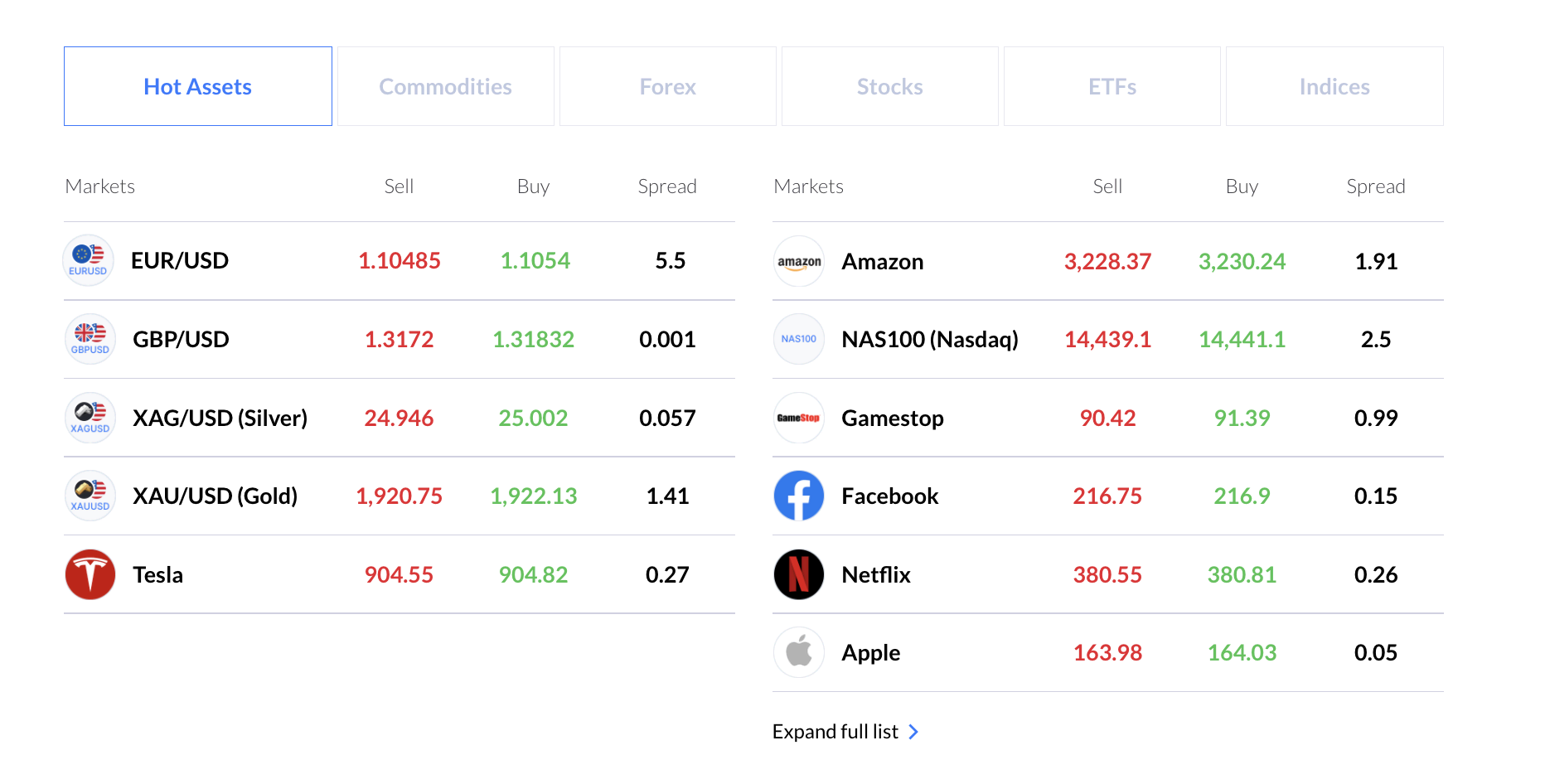
We know that a spread is what you pay to the broker. It is usually applicable while dealing with future options such as Forex. So we must know the spread that Capital.com offers the Forex traders to decide which currency pair to trade-in.
Capital.com offers an ample spread list. It depends on the financial instrument that a trader chooses to trade with. However, for EUR/USD, the spread starts from 0.00006 pips. It is relatively lower compared to other brokers in Forex and CFD. Also, the spreads it offers are floating, so whether a trader pays more or less depends on market conditions.
Sometimes we can come across the brokers, who charge additional commissions with the spreads. But, Capital.com does not charge any commissions on trades. So, it serves as an extra benefit for traders.
That becomes a unique aspect because the brokers who do not charge commissions usually compensate with wider spreads, unlike Capital.com. Although the traders can expect typical spreads from 0.00006 pips when trading EUR/USD.
But we cannot find any indication of whether the account types determine the types of spreads or not. Therefore, the traders must verify the same with the broker before registering for a trading account. However, they can trade risk-free with the demo account till that time.
(Risk warning: 69% of retail CFD accounts lose money)
Capital.com additional fees:
Many a time, a spread may not be the only cost that a trader needs to pay. For example, various brokers charge different fees from their customers based on the account types and trading instruments.
So, a beginner trader must not be ignorant of certain additional fees that may occur. Ignoring them can cause an unexpected loss of funds. A broker’s fees to its customers can be divided into two classes. Based on whether it involves trading or not, we can classify the fees as
- Trading Fees- The fees are charged for a trading-related activity through the platform’s account. It includes transaction fees, Forex fees, currency conversion fees, etc.
- Non-Trading Fees-It is the type of fees charged for a non-trading activity such as deposit, withdrawal, inactivity, etc.
Let us look into the fees that Capital.Com charges from its customers.
Transaction/trading fees
A transaction fee is incurred when you successfully win a trade. It may sound unjust, but many brokers charge it. It is a cost that a trader has to pay to the broker for using the platform to complete the transaction.
So it may differ according to the asset types. Though Capital.com does not exempt certain trading fees, however, if we compare them with others, we can have more clarity. Capital.com charges the following fees for trading in different instruments.
The fees are measured by using the trading volume of $ 100,000 for one trade!
Forex fees
Currency Pair | Fees |
EURUSD benchmark fee | $10.0 |
GBPUSD benchmark fee | $6.8 |
AUDUSD benchmark fee | $5.5 |
EURCHF benchmark fee | $5.0 |
EURGBP benchmark fee | $8.2 |
Stock indices fees
Stock Index | Fees |
S&P 500 index CFD fee | $3.4 |
Europe 50 index CFD fee | $5.5 |
Apple CFD fee | $7.6 |
Vodafone CFD fee | $3.4 |
Real stock fees
Stock | Fees |
US stock | $0.0 |
UK stock | $0.0 |
German stock | $0.0 |
(Risk warning: 69% of retail CFD accounts lose money)
Currency conversion fees
Currency conversion is what the Forex market is all about, and we know its importance, but, the conversion fee which a broker charge is different. Usually, there are a few base currencies offered by a broker, in which the traders can choose as per their wish.
However, many a time, they wish to make a withdrawal or transaction in another currency. It is when the broker charges conversion fees. Capital.com also charges currency conversion fees from its customers.
It applies to all trades on instruments denominated in a currency different from the account. It is charged based on the exchange rate received from liquidity providers, in addition to a mark-up.
Overnight funding fees
It is another type of trading fee that applies to many brokers. An overnight funding fee signifies the charges from holding the trading position longer than the limit. When a trader fails to close the position within the time limit, which is usually 22:00 GMT, and holds the same position overnight, it occurs.
Many brokers levy high amounts. However, unlike their competitors, Capital.com charges an overnight fee based only on the provided leverage. It does not consider the position’s value for the trading instruments in crypto and shares. However, they charge on Indices, Commodities, and FX based on the entire value of your position.
Deposit fees
Deposit fees are a non-trading type of fee. They are applicable when the trader sends money to the trading account from the bank account. It is uncommon for a broker to charge an additional fee for depositing your own money. So, Capital.com offers nothing different here.
It is free from deposit fees and does not charge a single dollar. As a result, you can see the same amount of funds in the trading account you transferred through the bank account. However, Capital.com has a minimum deposit requirement, which is cheaper and fixed at $20.
Withdrawal fees
A withdrawal fee is charged while withdrawing your profits or funds from the trading account. It is an additional fee that various Forex and other brokers charge. But, Capital.com offers a charge-free withdrawal process. So, you can expect the same amount in your bank balance that you wish to transfer from the trading account.
Inactivity fees
Usually, when you create an account in a trading broker’s platform, you need to use it without keeping it inactive for long. It is kept so that the user connects the account with the server and may be required every three months for certain brokers. Some even have a maximum inactive period of just 21 days also.
However, Capital.com does not charge an inactivity fee from its customers. It means that even if the trader stays dormant for longer than a year, the account will reconnect to the server like before without any cost.
(Risk warning: 69% of retail CFD accounts lose money)
What does spread signify?
A spread signifies the difference between two prices. It is applied in the trading of assets, wherein the most well-known spread is the bid-ask spread. It denotes the difference between a security’s or asset’s bid (buyers) and asks (sellers) prices. Relative value trading is another name for spread trading.
Spread is how brokerages make money. It is what brokerages charge you to use their data to make trades. So, the understanding of spread is crucial for traders. Now, the spread is expressed in percentages in points (pips). So, it refers to a minor shift in the price of a currency pair in Forex.
Most currency pairs are generally priced to four decimal places, with the pip change being the last decimal point. A pip, therefore, is equal to 1/100 of one percent.
A currency pair is a quote of two separate currencies, with the price of one currency expressed against the price of the other. For example, EUR/USD is trading at 1.1116, so if a trader wants to buy 1 EUR, he must pay 1.1116 USD.
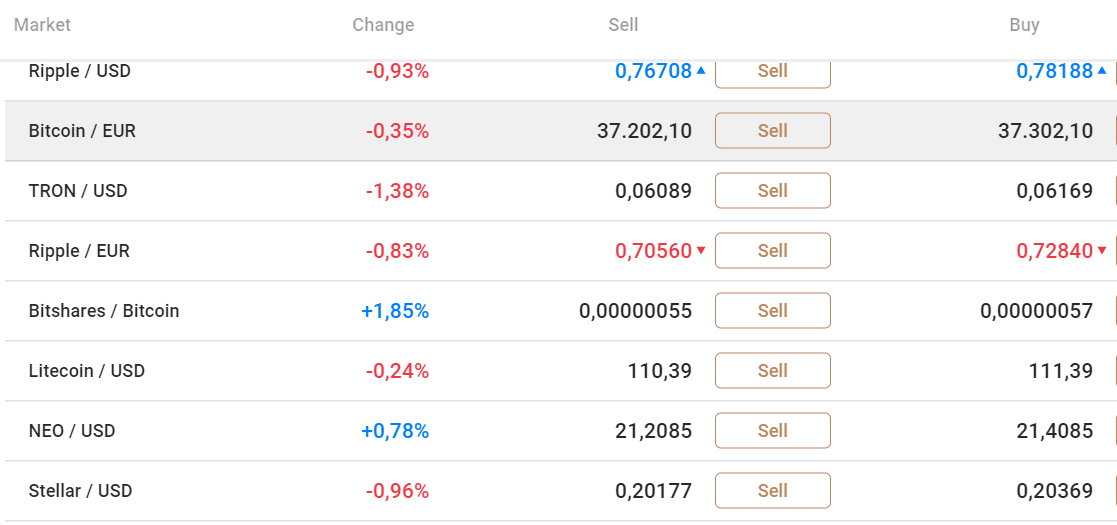
We know that currency is the most liquid asset in the world. As a result, it has the most minute bid-ask spreads (one-hundredth of a percent). Stocks and other less liquid assets may have much higher spreads.
For example, if the bid price for an asset is $355 and the asking price is $356, the bid-ask spread for the stock in question is $1. Bid-ask spread is applied when trading assets like currency pairs or stocks.
One of the uses of this spread is to measure market liquidity. Some markets have more liquidity than others. As a result, their spreads are lower. Most currency pairs in forex exchange with no costs. However, the spread is a cost that comes with the deal.
Several factors can influence the size of a spread. Liquidity, volatility, and volume are some factors that affect the size of a spread. When trading with spread, the trader must always check the spread size and place their orders accordingly.
The market price should be above the spread price to make a profit. Moreover, a spread may be constant or variable. A new trader must know that heavily traded assets will have a tight spread. For example, stocks of Apple or Google will have a lower bid-ask spread compared to unestablished stocks.
Trading volume and demand level also affect how high a bid-ask spread is. In addition to the bid-ask spread, Credit spread is another type. It is more commonly known as Yield spread. As mentioned above, Bid-ask spread is the most common type of spread found in Forex. Other Spreads are primarily used for market analysis or by high-level traders.
Conclusion: Low fees and spreads with Capital.com
Capital.com is among the best brokers around the world, without any doubt. It is regulated by FCA and CySEC, which assure a safe trading experience even to a newbie trader. Though it began its services in 2016, it has grown tremendously in such a short span.
Moreover, it has fees and spreads that are affordable even to beginners, and it offers a commission-free service. Hence, we can conclude that it can be an ideal broker choice for those looking for bud-friendly trading.
(Risk warning: 69% of retail CFD accounts lose money)
FAQ – The most asked questions about Capital.com fees :
Does capital.com charge a commission?
Unlike other brokers, Capital.com is a commission-free broker. It makes its money mostly from spreads. It also does not charge any additional fees that we often expect from other brokers.
Is Capital.com free?
We can say that Capital.com offers a free deposit, withdrawal, opening, and closing of trades, etc. However, it applies a spread that compensates with the monetary charges. Moreover, it charges a currency conversion fee and an overnight funding fee. However, they are relatively low in comparison with others. Therefore, we cannot claim Capital.com to be a free broker.
What are the spreads available on Capital.com?
The spreads are pretty competitive if we compare them with other renowned brokers. By clicking on the link, one can see a stark difference between the tight spreads offered at Capital.com.
What is the withdrawal fee on Capital.com?
When you take money from your trading account, a withdrawal fee is assessed. Different Forex and other brokers charge it as an extra cost. However, Capital.com provides a fee-free withdrawal procedure.
What is the overnight fee on Capital.com?
An overnight fee indicates the fees for holding a trading position open longer than authorized. It happens when a trader maintains the same position overnight after closing it outside the designated timeframe, normally 22:00 GMT. Many brokers charge outrageous commissions. Unlike its competitors, Capital.com, on the other hand, charges an overnight fee based only on the leverage given.
What is the starting spread value for EUR/USD on Capital.com fees?
In the case of EUR/USD, the spread begins at 0.00006 pip. It is substantially less expensive when compared to other Forex and CFD providers. Additionally, since the spreads it offers are floating, a trader’s ability to make a profit or loss depends on the state of the market.
See more articles about online brokers:
Last Updated on January 27, 2023 by Arkady Müller


